Central Research Approach
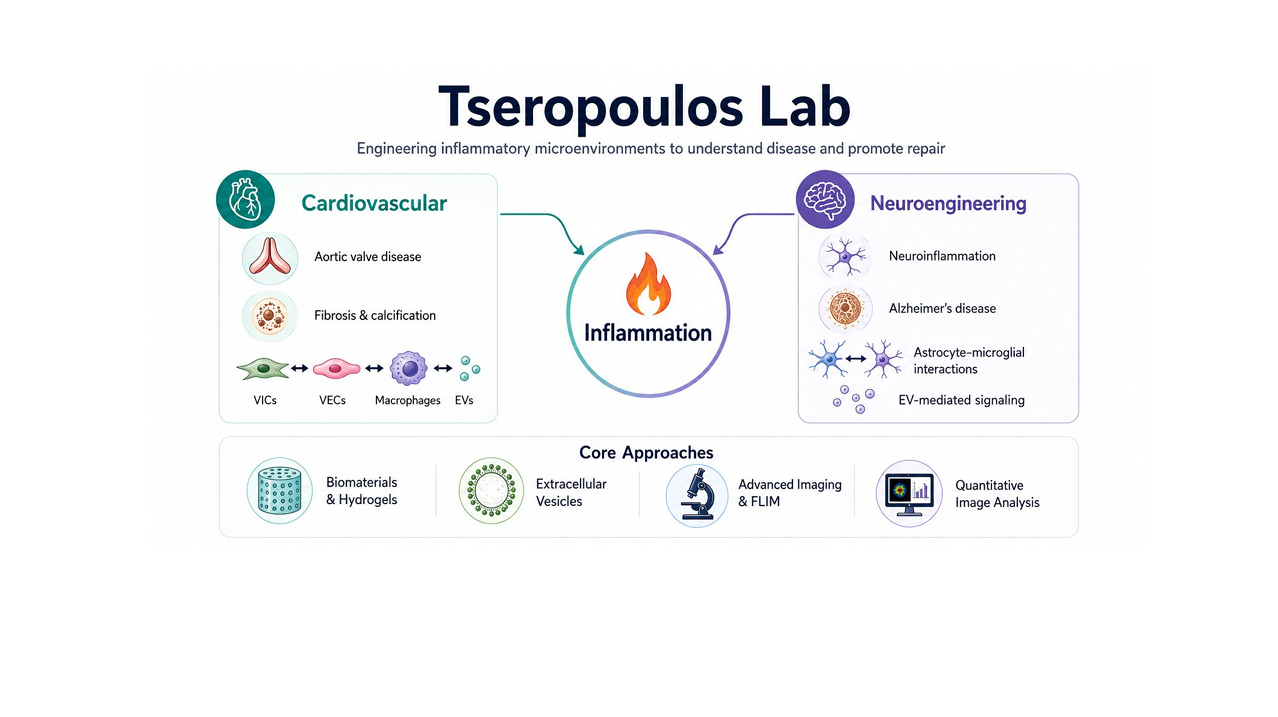
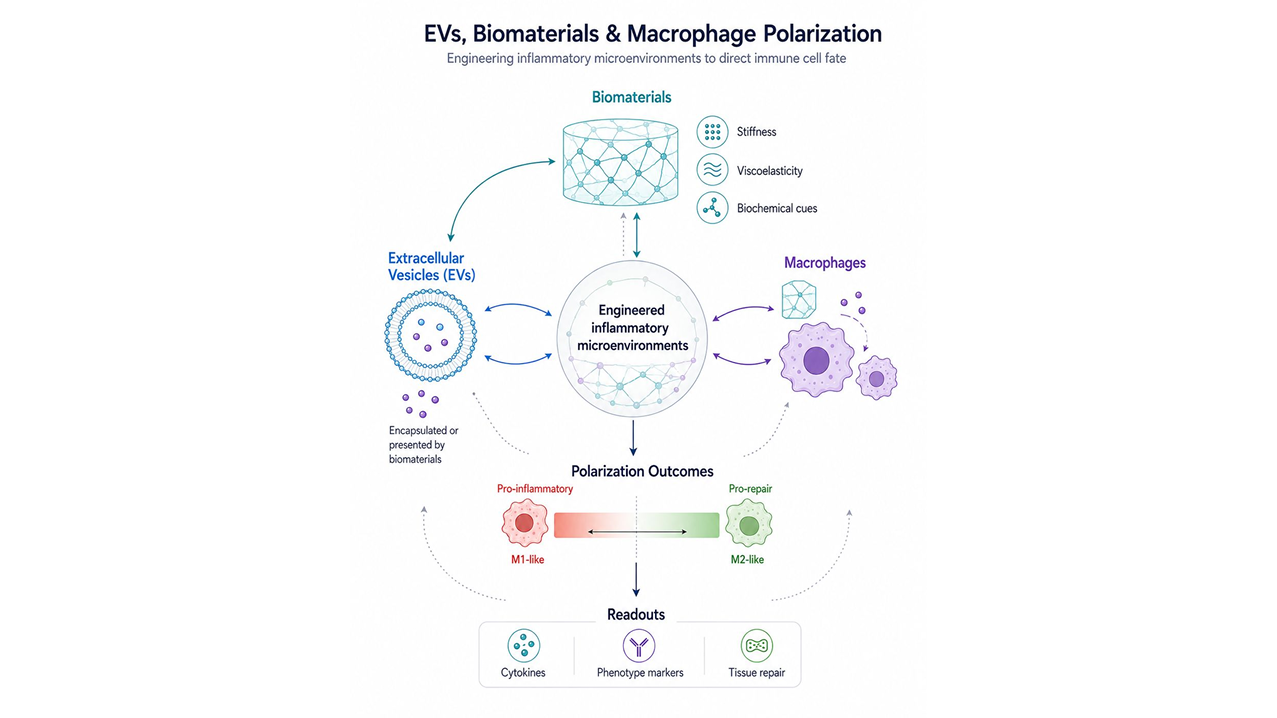
The lab investigates how extracellular vesicles and biomaterial microenvironments together shape macrophage behavior. Rather than treating polarization as a simple M1/M2 binary, this work examines how EV cargo, delivery and presentation, hydrogel mechanics, viscoelasticity, membrane tension, and cellular metabolism influence macrophage transitions among inflammatory, resolving, phagocytic, and repair-associated states.
By integrating engineered granular hydrogels, extracellular vesicle engineering, real-time imaging, and fluorescence lifetime microscopy, the lab aims to establish design principles for controlling how macrophages encounter, interpret, and respond to therapeutic signals.
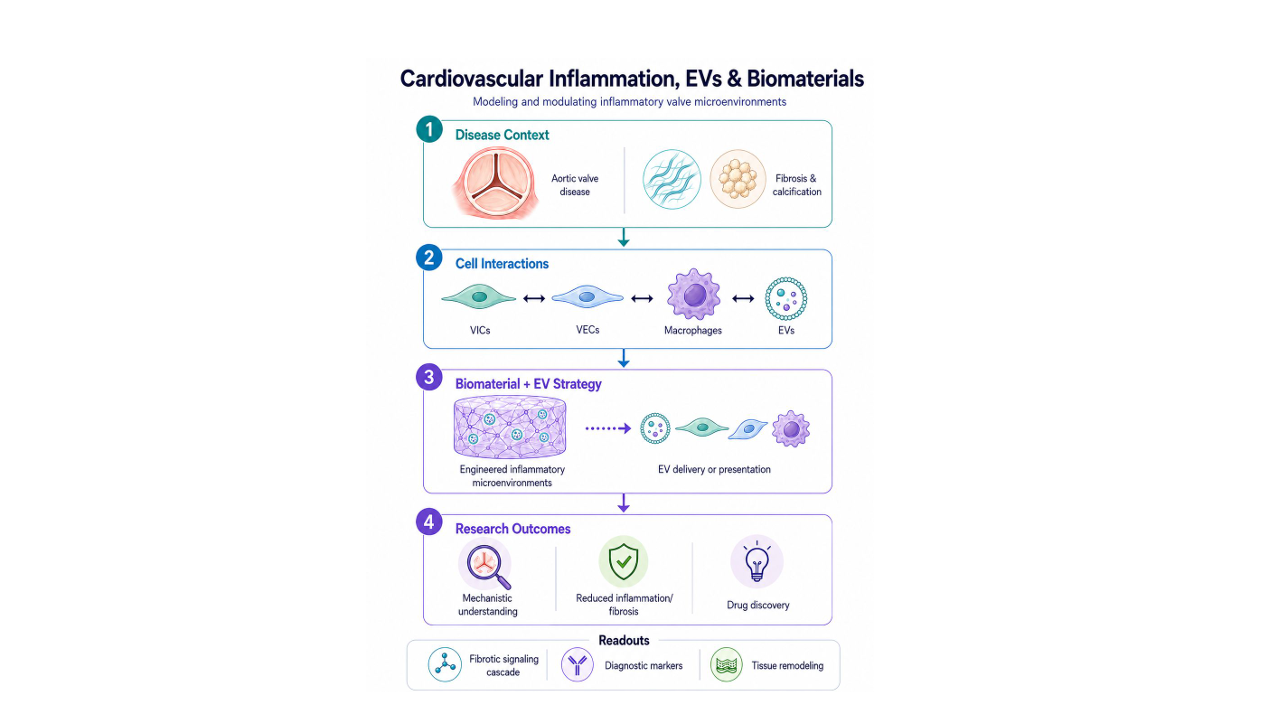
In its cardiovascular research component, the lab examines how inflammation contributes to fibrosis, calcification, and progressive dysfunction in aortic valve stenosis (AVS). The group studies communication among valvular cells, endothelial cells, fibroblasts, and immune cells, with particular emphasis on extracellular vesicles as mediators of inflammatory signaling.
Researchers develop hydrogel-based models that reproduce key features of diseased tissue environments, including altered stiffness, viscoelasticity, and biochemical signaling. These systems are used to identify how inflammatory signals modulate pathological cell behaviors and to develop extracellular-vesicle-based strategies that reduce fibrosis and support healthier tissue remodeling.
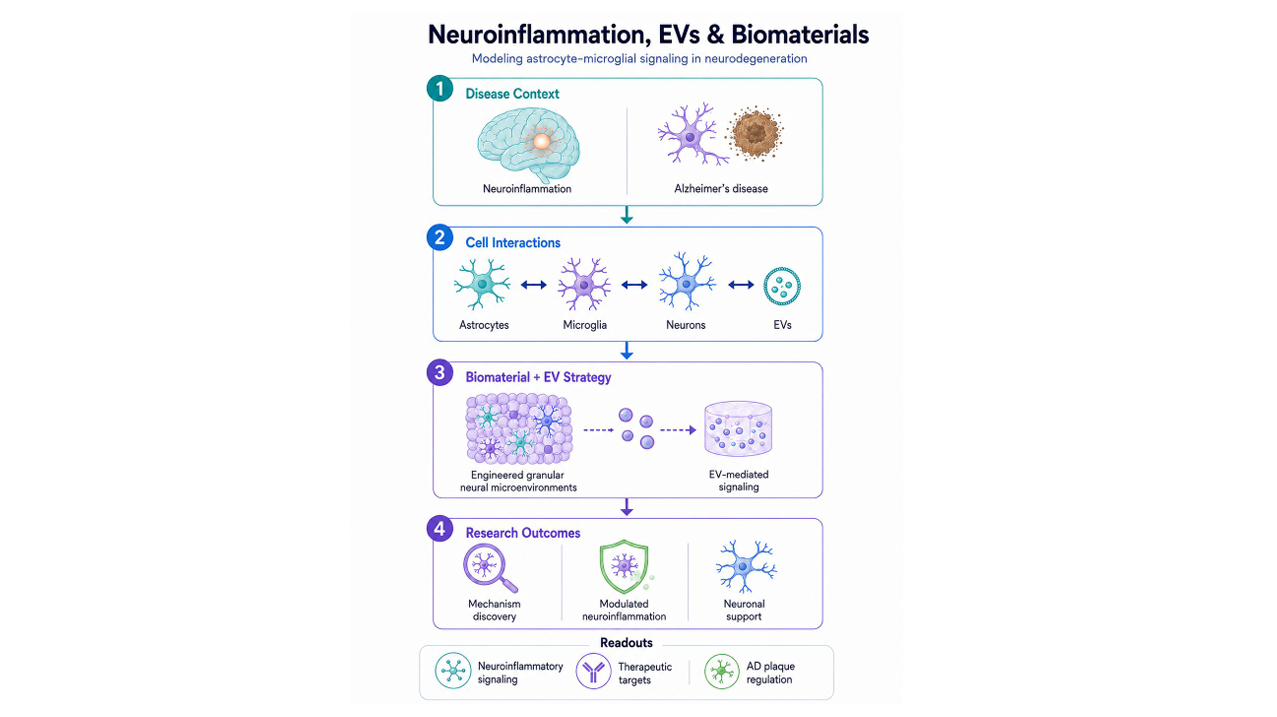
In its neuroengineering research component, the lab investigates how inflammation influences neural injury, degeneration, and repair. This work focuses on communication among immune cells, neural-supporting cells, and extracellular vesicles, and how these interactions affect cell fate, tissue recovery, and disease progression.
A major area of interest is Alzheimer's disease, where the lab will study how astrocyte–microglial interactions shape neuroinflammatory responses and plaque-associated dysfunction. In particular, the group examines how extracellular vesicles mediate signaling between astrocytes and microglia, and whether these signals can be modulated to promote healthier immune responses, support neuronal survival, and improve tissue repair.
Using biomaterial platforms and high-resolution imaging, the lab explores ways to regulate neuroinflammatory environments, model cell-to-cell communication, and improve therapeutic delivery for neurological disease.